
In the blink of an eye
- Home dressing : necessary after surgery, superficial burn, ulcer or early pressure sore.
- The nurse follows a strict procedure : hand hygiene, cleaning, antisepsis, traceability.
- Simple dressings: Enables aging in place, ensures safe hospital discharge, and reduces readmission rates.
- Health insurance reimburses 60% ; total exemption in cases of long-term illness or work-related accidents.
- Choose a professional registered with the Order , available 7 days a week if needed.
A properly applied dressing protects the wound, lowers the risk of infection, and promotes faster healing. When care continues at home, several options are available, including a private nurse, a home nursing care service (SSIAD), or home hospitalization for more complex wounds. Understanding the various care situations, treatment steps, and financial arrangements helps you organize wound care at home with confidence while following medical guidelines.
01. When is home wound dressing needed?
Home dressings are used after hospital discharge or when wound healing is delayed (1,2). They are commonly required:
- following surgery to reduce the risk of infection;
- for minor traumatic injuries such as cuts or abrasions that require moist wound healing;
- in cases of venous or arterial ulcers, which are chronic wounds that fail to heal within four to six weeks;
- for superficial or second-degree burns;
- for stage I–II pressure ulcers and open blisters.
02. How are home dressings carried out?
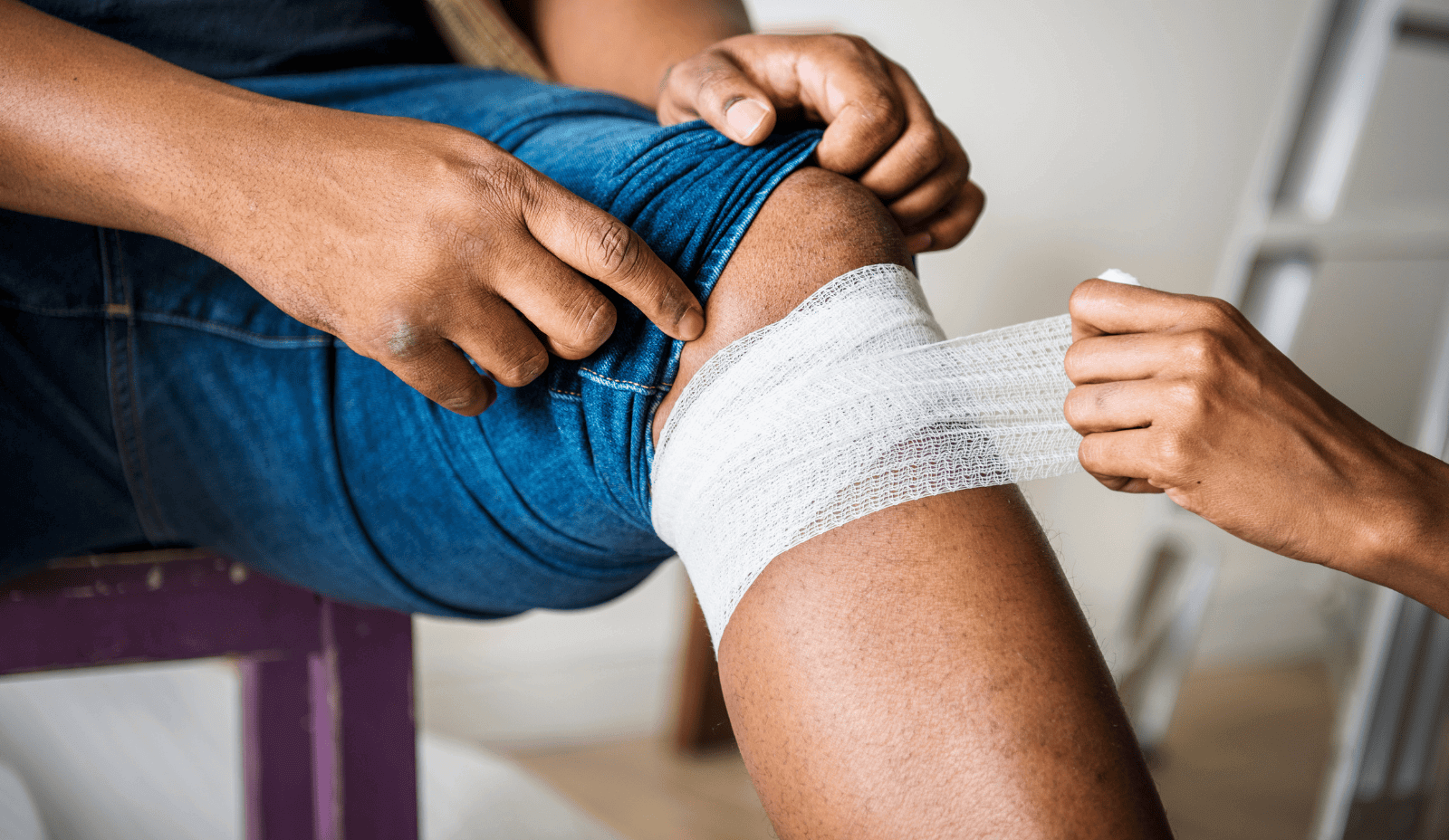
The licensed nurse visits according to the medical prescription, explains the procedure, and prepares a clean working area. After hand hygiene, the soiled dressing is removed using non-sterile gloves, disposed of safely, and handwashing is repeated. Sterile gloves are then worn to cleanse the wound with saline solution, apply antiseptic treatment, place the new dressing, and record the care provided. (3)
What types of dressings can be provided at home?
A private nurse can manage most dressings at home, provided the wound is stable and the patient shows no general signs of infection.
- Sterile post-operative dressings protect sutured wounds and help prevent infection. (3)
- Superficial first- or second-degree burns are treated with hydrogels or hydrocolloids that maintain a moist healing environment. (2)
- Chronic wounds—such as venous or arterial ulcers or shallow diabetic foot ulcers—require absorbent foams, alginates, or hydrofibers to manage exudate while preserving granulation tissue. (2)
- Stage I–II pressure ulcers, limited to the skin and dermis, are often covered with hydrocolloids or silicone foams to reduce friction and promote healing. (2)
- Minor traumatic wounds, including cuts and grazes, can be treated with non-adherent or petroleum jelly dressings. (2)
Deep, heavily exuding, or infected wounds require specialized follow-up or home hospitalization.
Simple versus complex dressings
A dressing is considered simple when the wound is sutured, produces minimal exudate, and requires no drainage. It is classified as complex when it involves packing, debridement, or strict aseptic techniques, as seen with extensive ulcers or burns. (4)
What equipment is required for wound care?
The dressing kit includes sterile gloves, compresses, a sterile drape, saline solution, antiseptic, appropriate dressings, and a waste disposal container. Any concerns or changes in the wound’s appearance should prompt a medical consultation. (3)
03. How do you choose a nurse for home wound care?
Home wound care can be provided by the following professionals (5):
- Home nursing care services (formerly SSIAD): multidisciplinary teams that coordinate daily assistance and provide prescribed care—such as dressings and injections—for older adults, people with disabilities, or individuals with chronic illnesses.
- Nursing health centers: salaried nurses provide prescribed nursing care and hygiene support at home, available seven days a week.
- Self-employed nurses: working independently or in a practice, they carry out prescribed home visits daily, including weekends and public holidays.
- Home hospitalization (HAD): a hospital-level care option delivering complex or intensive medical and paramedical care—such as palliative care or advanced dressings—24 hours a day when standard home services are not sufficient.
Tip: Monitor the wound closely—redness, increasing pain, or unusual odors should be reported to a healthcare professional promptly.
04. How much does a home dressing change cost?
A simple dressing (AMI 2) is billed at €6.30, while a complex or heavy dressing (AMI 4) costs €12.60. A flat-rate travel fee of €2.75 is added per visit. (6)
Health Insurance coverage
In most cases, Health Insurance reimburses 60% of the cost, with the remaining amount constituting the patient’s co-payment.
Additional reimbursement by supplemental insurance
The co-payment is the portion you are responsible for. Depending on your supplemental health insurance plan, this amount may be partially or fully reimbursed. Be sure to review your coverage details. (8)
Situations with 100% coverage
Care related to qualifying long-term illnesses is fully reimbursed, excluding the medical deductible. Dressings prescribed following a work-related accident are also fully covered. (8,9) The information provided is for general guidance only and should not replace medical advice. Self-diagnosis and self-treatment are strongly discouraged.
About the author
Stéphanie Le Guillou
Pharmacist
Stéphanie Le Guillou holds a doctorate in pharmacy (2011) and a doctorate in cancer biology (2014). She began her career in a public hospital before moving into the pharmaceutical industry. For several years, she has focused on making health information clear, reliable, and accessible to a broad audience.
Frequently Asked Questions
What should I do if my wound is not healing?
If your wound remains open, red, or painful after two weeks, despite daily cleansing with saline solution and the use of an appropriate dressing, it is important to consult your doctor promptly. Your physician will assess for possible infection, circulatory issues, or diabetes and may recommend antibiotic treatment, additional tests, or a referral to a specialist (such as a dermatologist, surgeon, or wound care center). Ongoing nursing care, smoking cessation, and good blood sugar control can further support proper healing.
Are nurses allowed to prescribe dressings?
Yes. Since 2012, licensed nurses have been authorized to prescribe, renew, and apply certain medical devices listed under the LPPR. These include adhesive dressings, sterile gauze, absorbent foam dressings, and semi-permeable films. Such prescriptions may cover the full course of nursing care unless a physician states otherwise, with the initial supply limited to seven days as of April 2025.
How much does a home injection cost?
A home-administered intramuscular or subcutaneous injection is charged at AMI 1: €3.15. This amount is supplemented by a fixed travel fee (€2.75) and, when the injection is the sole procedure, an additional single-procedure fee (€1.35). The total cost comes to €7.25 on weekdays, €15.75 for night visits, and €8.50 on Sundays.